Vanishing Depth: The Hidden Liquidity Trap Destroying Retail Traders on Low-Volume Altcoins
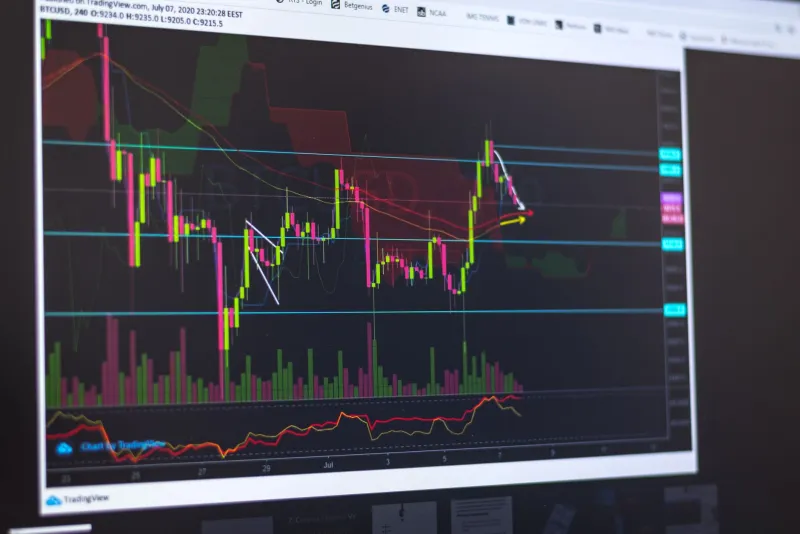
There is a particular kind of frustration that comes only after the trade has already executed. A retail investor identifies what appears to be a promising altcoin, checks the order book, observes a seemingly comfortable spread and substantial depth on both sides, and places a market order — only to watch the fill price land several percentage points away from the quoted figure. The liquidity that appeared to exist simply was not there when it mattered. This is the ghost liquidity problem, and it is one of the most systematically underappreciated hazards in the digital asset space.
What Depth Charts Are Actually Telling You
An order book depth chart visualizes the cumulative volume of buy and sell orders at various price levels. On its surface, a chart showing thousands of tokens stacked within a narrow price band signals a liquid, stable market. The problem is that this visualization reflects a static snapshot of orders that can be canceled in milliseconds. Market makers — and more frequently, manipulative actors — place large limit orders specifically to create the visual impression of depth without any genuine commitment to execute at those prices.
This practice, commonly referred to as spoofing, is explicitly illegal in traditional equity markets under the Dodd-Frank Act. In cryptocurrency markets, however, enforcement remains inconsistent, and the behavior persists at scale across hundreds of low-volume altcoin pairs. The orders exist on the book long enough to be seen, long enough to attract volume, and are pulled the moment a real market order approaches.
The result for retail participants is predictable: they enter a trade believing they have adequate price support, and instead absorb the full cost of a market that was never as deep as it appeared.
How Liquidity Pools Amplify the Problem on Decentralized Exchanges
The dynamics grow considerably more complex on decentralized exchanges, where automated market makers replace traditional order books. Here, liquidity is provided by pools of paired assets, and pricing is determined algorithmically based on the ratio of those assets. A pool may display a substantial total value locked figure, but that number alone is a dangerously incomplete metric.
The critical variable is concentration. A pool with $2 million in total value locked but with 90 percent of that capital deployed in a narrow price band will collapse rapidly once trading volume pushes price outside that range. Liquidity providers, many of whom are sophisticated actors with automated rebalancing strategies, will withdraw their capital or shift their positions before retail traders even recognize what is happening. What looked like a deep pool is suddenly a shallow puddle, and the price impact of even a modest order becomes severe.
This mechanism played a visible role in several notable pump-and-dump events during 2023 and 2024, where newly launched tokens demonstrated extraordinary on-chain liquidity metrics during the accumulation phase, only to see that liquidity vanish within hours of the coordinated sell-off. Retail buyers, drawn in by the apparent stability of the pool, were left holding positions they could not exit without absorbing catastrophic losses.
The Professional Playbook: Exploiting the Illusion
Understanding how professional traders and coordinated groups exploit ghost liquidity requires examining the mechanics of a manufactured market. The typical sequence unfolds in three stages.
First, a token is launched or targeted, and a small group of actors acquires a disproportionate share of the supply. Second, artificial liquidity is deployed — either through spoofed limit orders on centralized exchanges or through seeded liquidity pools on decentralized platforms — to create the appearance of an actively traded, well-supported market. Third, retail interest is cultivated through social media activity, influencer promotion, or coordinated buy pressure that triggers algorithmic trend-detection tools. Once retail volume reaches sufficient scale, the coordinated actors exit, withdrawing liquidity and dumping supply simultaneously.
The precision of this approach is not accidental. These actors understand that retail traders rely on surface-level metrics — trading volume, liquidity depth, price momentum — rather than the underlying mechanics that reveal whether that activity is genuine.
Metrics That Reveal Genuine Liquidity
The first and most important distinction to internalize is the difference between quoted depth and realized depth. Quoted depth is what the order book shows before your order executes. Realized depth is the actual price impact your specific order size produces. Tools such as Kaiko, CoinGecko's liquidity scoring system, and on-chain analytics platforms like Nansen allow traders to measure market impact directly, rather than inferring it from static snapshots.
Several specific metrics deserve attention when evaluating an altcoin's liquidity quality:
Bid-ask spread consistency over time. A market with genuine liquidity maintains a relatively stable spread across different time windows, including periods of low overall market volume. A spread that tightens dramatically during high-attention periods and widens substantially during off-hours is a signal that market-making activity is being performed selectively.
Order book refresh rate. Legitimate market makers refresh their quotes frequently in response to changing conditions. Spoofed orders tend to sit static for longer periods before being canceled in bulk. Monitoring the velocity of order book changes can reveal whether depth is being actively maintained or simply displayed.
Pool liquidity provider concentration. On decentralized exchanges, the distribution of liquidity provider addresses matters significantly. A pool where three or four wallets control the majority of deposited capital is structurally fragile. Those wallets can withdraw simultaneously, and sophisticated actors have automated tools to do precisely that.
Volume-to-market-cap ratio anomalies. An altcoin trading at a volume-to-market-cap ratio that significantly exceeds its peer group without a corresponding fundamental catalyst is frequently experiencing manufactured volume — a pattern that precedes liquidity withdrawal events.
Practical Steps for US Retail Investors
For investors operating in the US market, where regulatory clarity continues to evolve and retail protections in crypto remain limited relative to traditional securities, self-imposed discipline is the primary safeguard.
Before placing any market order on a low-volume altcoin, simulate the price impact using the exchange's own tools or third-party analytics. Most major decentralized exchange interfaces now provide estimated price impact figures for a given trade size — treat any figure above one percent as a serious caution signal and any figure above three percent as a near-disqualifying condition for a market order.
Use limit orders wherever possible. A limit order does not guarantee execution, but it guarantees that you will not pay more than the price you specify. In illiquid markets, the inability to fill at your limit is information — it tells you the market does not support your intended transaction at a fair price.
Finally, treat on-chain liquidity metrics with the same skepticism you would apply to any figure that a counterparty has a financial incentive to misrepresent. In a market without a centralized authority enforcing depth integrity, the depth chart is a suggestion, not a guarantee. The traders who understand this distinction are the ones who survive low-volume altcoin markets intact.