Broken Hedge: Why Bitcoin Failed as an Equity Counterweight in 2024 and What US Investors Should Use Instead

Photo by Photo by Vladislav Maslow on Unsplash on Unsplash
For years, the narrative was compelling: Bitcoin, uncorrelated to traditional markets, offered a natural counterweight to equity exposure. When the S&P 500 faltered, BTC would hold — or even appreciate. It was a story that attracted institutional allocators, retail portfolios, and financial advisors looking for modern diversification tools. In 2024, that story faced its most serious empirical challenge yet.
The data does not lie. During several of 2024's most pronounced equity drawdowns, Bitcoin moved in the same direction, often amplifying losses rather than cushioning them. Understanding why this happened — and under precisely which conditions — is not an academic exercise. For US investors managing real capital, it is a prerequisite for building portfolios that can survive the next market dislocation.
The Correlation Relationship Was Never Stable
A foundational error in the Bitcoin-as-hedge thesis is treating correlation as a fixed property. In reality, the relationship between BTC and equity indices is regime-dependent. During low-stress environments, Bitcoin can behave as a genuinely independent asset. But when systemic risk events trigger broad risk-off sentiment, correlations across nearly all asset classes — including crypto — compress toward 1.
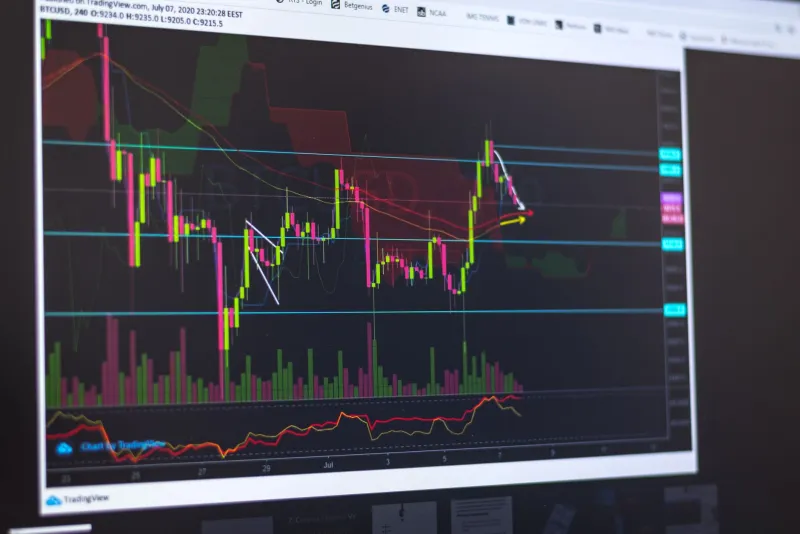
This was documented across multiple episodes in 2024. When the Federal Reserve's rate posture shifted unexpectedly, or when earnings data from major technology companies disappointed, Bitcoin did not decouple. It sold alongside equities, sometimes with greater velocity. Rolling 30-day correlation coefficients between BTC and the Nasdaq 100 reached levels above 0.70 during peak stress windows — a figure that effectively dismantles the diversification argument for short-to-medium time horizons.
The mechanism is straightforward. Institutional participants who hold both equities and crypto tend to liquidate the most liquid assets first during margin calls or risk reduction mandates. Bitcoin, as the most liquid digital asset, becomes a funding vehicle during equity selloffs — not a safe haven.
Which Combinations Actually Provided Protection
If Bitcoin failed as a hedge in 2024, what did work? The answer requires disaggregating the crypto asset class rather than treating it as monolithic.
Short-dated Treasury bills and cash equivalents remained the most reliable uncorrelated asset during equity stress. While this may seem obvious, the data reinforces that no crypto asset consistently provided negative correlation during the sharpest drawdown windows of the year.
Within the digital asset space, Bitcoin dominance positioning offered more nuanced signal. During broad crypto-equity selloffs, Bitcoin frequently outperformed altcoins on a relative basis — meaning investors who held BTC as a proportion of a larger crypto allocation saw better risk-adjusted outcomes than those concentrated in mid- or small-cap tokens.
Gold and gold-backed assets maintained their traditional safe-haven properties more reliably. The GLD ETF, for instance, showed negative correlation to the Nasdaq during multiple 2024 stress events, a characteristic Bitcoin did not replicate. For US investors with access to commodity exposure, gold's role in the hedging stack deserves reassessment.
Why the Illusion Persists
If the inverse correlation between Bitcoin and equities is unreliable, why does the narrative endure? Part of the answer lies in selective time framing. Over multi-year periods, Bitcoin's price trajectory has been largely independent of equity market cycles — driven by halving cycles, regulatory developments, and adoption dynamics that have no direct equity analog. This long-run independence is real. It simply does not translate into reliable short-run downside protection.
Another factor is survivorship bias in popular analysis. Studies that demonstrate low average correlation between BTC and equities often use full-period data that includes extended bull markets in both assets. The correlation during those periods is low because both are rising for different reasons. The relevant metric for hedging purposes is conditional correlation — specifically, how the assets relate when equities are falling sharply. That figure is substantially higher.
A Practical Hedging Framework for 2025 and Beyond
US investors seeking genuine downside protection in digital asset portfolios should consider a layered approach that does not rely on any single correlation assumption.
Layer one: Structural cash buffers. Maintaining 10–20% of a crypto portfolio in USDC or short-duration Treasury-backed stablecoins provides immediate liquidity during selloffs without requiring asset sales at distressed prices.
Layer two: Bitcoin dominance as an internal hedge. Rather than hedging BTC with altcoins, investors can use Bitcoin's relative strength during stress events by intentionally overweighting BTC during periods of elevated macro uncertainty and rotating into higher-beta tokens during calmer conditions.
Layer three: Traditional macro hedges. Gold, short-volatility products, or inverse ETFs on equity indices provide genuine negative correlation that no crypto asset currently replicates with consistency. These instruments belong in the toolkit of any serious digital asset investor managing significant capital.
Layer four: On-chain liquidity monitoring. Exchange inflow data, stablecoin supply ratios, and funding rates on perpetual contracts provide early signals of institutional deleveraging — often before equity markets react. Monitoring these indicators allows for proactive position reduction before correlation spikes occur.
The Honest Assessment
Bitcoin is not a reliable short-term hedge against equity market stress. Accepting this does not diminish its long-term investment case — it simply clarifies its role in a portfolio. Investors who entered 2024 expecting BTC to protect them during equity drawdowns discovered that the asset class behaves like a high-beta risk asset during systemic stress, not a safe haven.
The frameworks that survived 2024's volatility tests were those built on honest conditional correlation analysis rather than long-run averages. At CoinCasso Group, precision in these distinctions is what separates portfolios that endure from those that erode quietly during the exact moments investors need protection most.