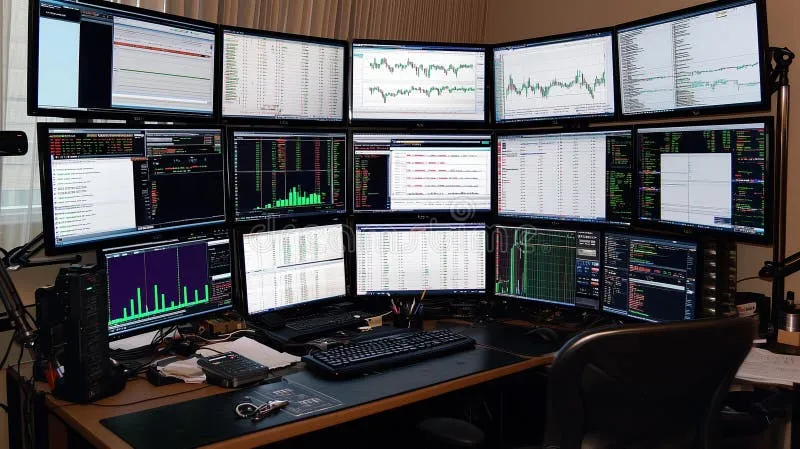
Following the Smart Money: A Trader's Guide to Reading Institutional Crypto Flows Before the Market Moves
The cryptocurrency market has a transparency problem—but not the kind that hurts informed traders. Unlike equity markets, where institutional positioning is disclosed on a delayed and aggregated basis, blockchain infrastructure records large capital movements in near real time. The challenge is not a lack of data; it is the ability to interpret that data accurately, filter out noise and manipulation, and convert genuine signals into executable trading decisions before the broader market catches on.
This is the discipline that separates traders who consistently find themselves on the right side of large moves from those who chase price action after the fact. At CoinCasso Group, we treat institutional flow analysis as one of the most reliable edges available to disciplined retail participants—provided it is practiced with rigor and a clear understanding of its limitations.
Why Institutional Flows Matter and Where They Show Up
Large participants—whether hedge funds, proprietary trading desks, or corporate treasury operations—cannot move significant capital without leaving traces. The scale of their activity is inherently visible, even when they attempt to obscure it through order splitting, OTC routing, or timed execution. The key is knowing which data streams capture different aspects of this activity.
Exchange flow data is the most accessible starting point. Net inflows to major centralized exchanges—measured in BTC, ETH, or other assets—have historically correlated with near-term selling pressure, since assets moved onto exchanges are typically being prepared for liquidation. Conversely, sustained net outflows suggest accumulation, as holders transfer assets to cold storage or custody solutions that imply a longer holding horizon. On-chain analytics platforms provide this data with sufficient granularity to distinguish between wallet categories, separating exchange-controlled wallets from identifiable institutional custody addresses.
Derivatives positioning offers a complementary signal. Open interest in Bitcoin and Ethereum futures on regulated venues such as the CME provides a direct window into institutional sentiment, since retail participants rarely access these instruments in size. Rising open interest accompanied by funding rate stability suggests directional conviction rather than speculative froth. When CME futures premiums diverge significantly from perpetual swap rates on offshore venues, the spread itself often signals which market is being driven by informed participants versus reactive retail flow.
Reading Smart Contract Interactions for Accumulation Signals
Beyond exchange flows and derivatives, on-chain smart contract activity provides a third layer of institutional intelligence. Large wallets interacting with decentralized finance protocols—particularly lending markets and liquidity pools—often telegraph positioning before it becomes visible in price.
Watch for wallet clusters that have demonstrated historical accuracy: addresses that accumulated during previous cycle lows and distributed near tops. While past behavior is not deterministic, wallets with documented institutional-grade transaction histories tend to exhibit consistent behavioral patterns. When these addresses begin moving assets from cold storage into active wallets, or when they initiate large staking or lending positions, the signal is worth examining in the context of broader market conditions.
Transaction size thresholds matter here. Genuine institutional activity tends to manifest in transactions above 100 BTC equivalent that are executed with deliberate timing—often during low-liquidity windows that minimize market impact. Retail-scale transactions that aggregate to large nominal values are a different phenomenon and should not be conflated with single-wallet institutional moves.
Distinguishing Real Accumulation from Manufactured Signals
This is where most retail traders lose their edge—and where disciplined analysis becomes most valuable. The same data streams that reveal genuine institutional activity are also exploited by coordinated groups attempting to manufacture the appearance of smart money movement in order to trigger predictable retail reactions.
Several red flags distinguish manipulation from authentic accumulation. First, examine the source wallets. Newly created addresses with no transaction history that suddenly execute large transfers are a structural warning sign. Legitimate institutional participants operate through wallets with documented histories, often traceable to known custodians or exchange deposit addresses. Anonymous wallets executing their first large transaction should be treated skeptically.
Second, assess the consistency of the signal across multiple data streams. Genuine institutional accumulation typically manifests simultaneously in exchange outflows, derivatives positioning shifts, and on-chain wallet behavior. Manufactured signals often appear in only one channel—frequently a highly visible one—because the actors creating them lack the capital to move multiple markets simultaneously.
Third, consider the narrative environment. Coordinated pump activity almost always coincides with a burst of social media volume, influencer promotion, and retail-facing content designed to amplify the signal. Authentic institutional moves, by contrast, tend to occur with minimal public commentary—large participants have no incentive to announce their positioning before it is complete.
Constructing an Actionable Monitoring Framework
Putting these concepts into practice requires a structured monitoring approach rather than ad hoc observation. A functional framework incorporates three elements: a set of tracked wallets, a defined threshold for signal activation, and a confirmation protocol that requires multiple independent signals before a trade is initiated.
For wallet tracking, maintain a curated list of addresses associated with documented institutional activity—major exchange cold wallets, known OTC desk addresses, and wallets that have demonstrated historically accurate timing across multiple market cycles. Several on-chain analytics platforms allow alert configuration for specific wallet activity, making systematic monitoring feasible without constant manual review.
For signal thresholds, define in advance what constitutes a meaningful movement. A single large transaction is insufficient; look for sustained directional activity over a 48-to-72-hour window that maintains consistency in direction and scale. Brief spikes in exchange inflows or outflows that reverse quickly are more likely to reflect operational transfers than strategic positioning.
For confirmation, require alignment between at least two independent data streams before treating a signal as actionable. Exchange outflows alone are not sufficient. Exchange outflows combined with rising CME open interest and declining funding rates on perpetual swaps—that convergence carries substantially more weight.
Sizing Positions Around Institutional Intelligence
Even well-confirmed institutional signals do not eliminate the inherent uncertainty of trading. Large participants make incorrect calls, and their positioning can be unwound rapidly if market conditions shift. The appropriate response is not to mirror institutional size but to use flow intelligence as a timing and directional input within a disciplined risk management framework.
When institutional signals align with your existing directional thesis, they provide a reasonable basis for increasing position size within predefined risk limits. When signals conflict with your thesis, they warrant a re-examination of your assumptions rather than an automatic position reversal. The goal is to incorporate superior information without abandoning the analytical rigor that produced your original view.
Used correctly, institutional flow analysis is one of the more durable edges available in digital asset trading. It requires patience, methodological discipline, and a healthy skepticism toward signals that appear too convenient—but for traders willing to develop these habits, it consistently offers a meaningful informational advantage over participants who rely on price action alone.